

If you have ever woken up with a stiff neck, a throbbing shoulder, or that dull ache that follows you through the entire morning, you already know how much sleep position and pillow choice matter. Millions of people deal with neck and shoulder pain every single day, yet few think to examine the one thing cradling their head for seven or eight hours each night. Choosing the right pillow for neck pain or the right pillow for shoulder pain could genuinely change how you feel when you wake up.
Why the Wrong . Makes Pain Worse
The spine has a natural curve, and the neck is no exception. When your pillow is too flat, your head drops and the muscles along the side of your neck strain to compensate. When it is too high or too firm, your neck is pushed into an unnatural angle for hours. Either way, the muscles tighten, the joints compress, and you wake up feeling worse than when you went to bed.
Shoulder pain adds another layer of complexity. Side sleepers, in particular, place enormous pressure on the shoulder they lie on. If the pillow does not fill the gap between the neck and the mattress adequately, the shoulder ends up bearing weight it was never designed to hold for that long. Over time, this can contribute to rotator cuff discomfort, tension headaches, and even tingling down the arm.
What to Look for in a Pillow for Neck Pain
Finding the best pillow for neck pain means thinking about a few specific factors.
Loft (Height): Loft refers to how thick the pillow is when your head rests on it. Side sleepers typically need a higher loft to keep the spine aligned, while back sleepers need a medium loft and stomach sleepers (though this position is best avoided for neck health) need very little. An adjustable pillow that lets you add or remove fill is a practical choice because everyone’s shoulder width and mattress firmness differ.
Support vs. Softness: There is a common misconception that a softer pillow is always better for neck pain. In reality, a pillow needs to be supportive enough to hold its shape throughout the night. Memory foam contours well to the shape of the head and neck, while latex offers responsive support that bounces back quickly. Buckwheat pillows are adjustable and firm, popular among people with chronic neck stiffness.
Shape: Cervical or contour pillows are designed with a dip in the middle for the head and raised sections at either end for the neck. These are specifically engineered to support the natural cervical curve and can be highly effective for people with persistent neck pain.
What to Look for in a Pillow for Shoulder Pain
A pillow for shoulder pain has slightly different requirements. The goal is to reduce pressure on the shoulder joint while keeping the neck neutral.
Side sleepers with shoulder pain often benefit from pillows with a cutout or notch at the base, which allows the shoulder to sit forward and reduces compression. Hugging a second pillow in front of the body can also take pressure off the top shoulder by keeping the arm elevated and supported.
For people who switch positions during the night, a medium-loft pillow with consistent support across its entire surface tends to work best. It needs to perform whether you are on your back or your side.
Complementing Your Pillow Choice with Other Recovery Practices
The pillow is only one piece of the puzzle. Stretching the neck and shoulders for a few minutes before bed can significantly reduce the tension that builds during the day, especially for people who sit at desks or look at screens for long periods. Gentle neck rolls, chin tucks, and doorway chest stretches help release the muscles that tighten around the shoulders and base of the skull.
Heat therapy applied to the neck and shoulders before sleep relaxes muscle fibers and improves circulation, making it easier for the body to recover overnight. Cold therapy is better suited for acute inflammation rather than chronic tension.
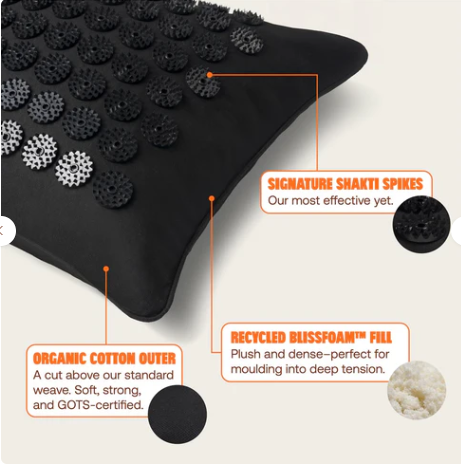
Acupressure is another practice worth exploring. Stimulating pressure points along the neck, shoulders, and upper back can encourage the release of muscle tension and promote relaxation before sleep, supporting whatever structural support your pillow provides.
Finding What Works for You
There is no single best pillow for neck pain that works for every person. Body type, sleep position, mattress firmness, and the specific cause of your pain all play a role. The best approach is to invest in a quality, adjustable option, give it a genuine trial period of several weeks, and pair it with consistent stretching and recovery habits.
For those exploring complementary wellness tools alongside better sleep hygiene, Shakti Mat offers acupressure products rooted in ancient Indian practice that many people find helpful for releasing neck and shoulder tension as part of a broader recovery routine.