Many women are told that painful periods are “normal”. For those with endometriosis, that advice can mean years of unnecessary suffering. Here’s how to tell when period pain deserves a closer look.
“Every Month, I Lose a Few Days”
You’ve planned your calendar around it for years. The first day or two of your period, you work from home if you can. You keep painkillers in every handbag. You’ve curled up with a hot water bottle more times than you can count, and you’ve cancelled plans because the cramps were too much.
When you mention it, people shrug. Your mother had painful periods too. A friend says it’ll get better after you have children. A doctor once told you to take more painkillers.
But what if it isn’t just bad cramps? For many women, pain that disrupts daily life is a sign of endometriosis, a common condition that often goes undiagnosed for years.
What Is Endometriosis?
The endometrium is the lining of the uterus. Each month, it thickens in preparation for a possible pregnancy, then sheds as a period if no pregnancy occurs.
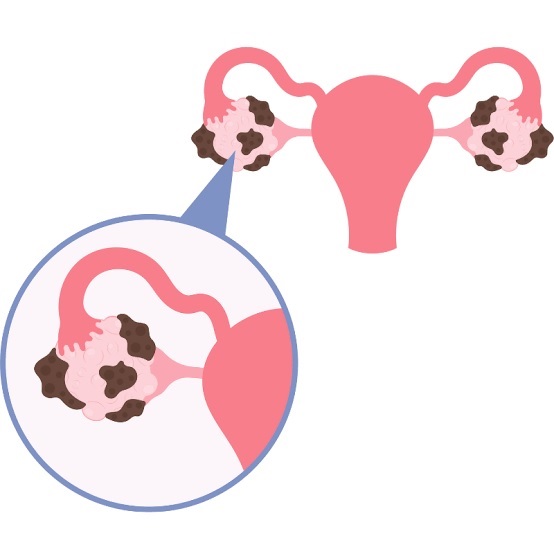
In endometriosis, tissue similar to this lining grows outside the uterus. It’s most often found on the ovaries, the fallopian tubes, the outer surface of the uterus and the lining of the pelvis. Less commonly, it can affect the bowel, bladder or other areas.
This tissue responds to monthly hormone changes, but unlike a period, it has nowhere to go. The result is inflammation, pain and, over time, scar tissue (adhesions) that can stick organs together.
Chocolate cysts
When endometriosis affects the ovaries, it can form cysts filled with old, dark blood. These are called endometriomas, or “chocolate cysts”, because of their colour.
How common is it?
The World Health Organization estimates that endometriosis affects around 10% of women and girls of reproductive age worldwide. That makes it one of the most common gynaecological conditions, yet it remains poorly understood by many.
Why Does It Take So Long to Diagnose?
Women with endometriosis often wait years between their first symptoms and a diagnosis. There are several reasons:
- Period pain is normalised – many women, and sometimes doctors, assume severe pain is just part of having periods
- Symptoms vary widely – some women have severe pain with mild disease, while others have extensive disease with few symptoms
- It can mimic other conditions – such as irritable bowel syndrome, urinary infections or pelvic inflammatory disease
- It’s hard to see on scans – especially when the disease is in small spots on the pelvic lining
- Reluctance to talk about it – in many cultures, including here in Singapore, periods and pelvic pain aren’t easy topics to raise
Signs You Might Have Endometriosis
Look out for these symptoms:
- Painful periods – especially pain that gets worse over the years or isn’t relieved by painkillers
- Pelvic pain – outside of your period, sometimes constant
- Pain during or after sex – often felt deep inside
- Bowel symptoms – pain when opening your bowels, bloating, diarrhoea or constipation, especially around your period
- Bladder symptoms – pain when passing urine, particularly during your period
- Heavy or irregular bleeding
- Fatigue – feeling exhausted, especially around your period
- Difficulty getting pregnant
You don’t need to have all of these. Even one or two, especially if they affect your daily life, are worth discussing with a gynae.
Endometriosis and Fertility
Endometriosis is one of the more common causes of difficulty conceiving. It can affect fertility in several ways: scar tissue can distort the fallopian tubes and ovaries, inflammation can affect the environment around the egg, and endometriomas can affect the ovaries.
That said, many women with endometriosis do conceive naturally. Others may benefit from surgery or fertility treatment. If you have endometriosis and are planning a family, it’s worth talking to your gynaecologist early, so your treatment can be planned around your goals.
How Is Endometriosis Diagnosed?
Your history
The first step is a detailed conversation about your symptoms. Keeping a diary of your pain, periods and bowel or bladder symptoms for a few months can be very helpful.
Examination and scans
A pelvic examination may reveal tenderness, nodules or a uterus that’s fixed in position. A pelvic ultrasound, often transvaginal, can detect endometriomas and sometimes deeper disease. In some cases, an MRI scan is used to map more extensive endometriosis.
Laparoscopy
A normal scan doesn’t rule out endometriosis. Small patches on the pelvic lining often don’t show up on imaging. A laparoscopy, a keyhole operation in which a small camera is passed into the abdomen, allows the surgeon to see endometriosis directly. Samples can be taken, and endometriosis can often be treated during the same procedure.
Treatment Options
There’s no one-size-fits-all approach. Treatment depends on your symptoms, the extent of the disease, your age and whether you want to become pregnant.
Pain relief
Anti-inflammatory painkillers can help, especially if started just before or at the beginning of your period.
Hormonal treatments
Because endometriosis responds to hormones, treatments that reduce or stop periods can ease symptoms. Options include:
- The combined contraceptive pill, sometimes taken continuously
- Progestogen tablets
- A hormonal intrauterine device (IUD)
- Medications that temporarily lower oestrogen levels
Hormonal treatments can control symptoms well, but they don’t cure endometriosis, and symptoms often return when treatment stops. They also aren’t suitable while trying to conceive.
Surgery
Laparoscopic (keyhole) surgery can remove or destroy endometriosis tissue, remove endometriomas and free up adhesions. For many women, this can significantly relieve pain and may improve the chances of conceiving.
Surgery for endometriosis can be complex, especially when the disease involves the bowel, bladder or deep pelvic tissues. It’s important to see a gynaecologist with experience in advanced laparoscopic surgery.
For women who have completed their families and have severe symptoms, a hysterectomy, sometimes with removal of the ovaries, may be considered. This is a major decision that should be discussed carefully.
Combined approaches
Many women do best with a combination of treatments, such as surgery followed by hormonal therapy to reduce the chance of symptoms returning.
Living Well With Endometriosis
Endometriosis is a long-term condition, but it can be managed. Alongside medical treatment, many women find these helpful:
- Regular exercise – which can ease pain and improve mood
- Heat – a hot water bottle or heat patch on the lower abdomen or back
- Pelvic physiotherapy – for pelvic floor muscle tension and pain
- Rest and stress management – fatigue and stress can make pain worse
- Support – talking to others with endometriosis or a counsellor can help
Your Pain Is Real
If your periods regularly stop you from working, studying or living your life, that’s not something you have to put up with. Endometriosis is common, and it can be treated. The first step is to have your symptoms taken seriously.
Consult a gynaecologist if period pain is severe, getting worse or affecting your daily life, or if you’re having difficulty conceiving.
The information here is for general education only. Endometriosis affects every woman differently, so please speak to a doctor for advice on your own symptoms.