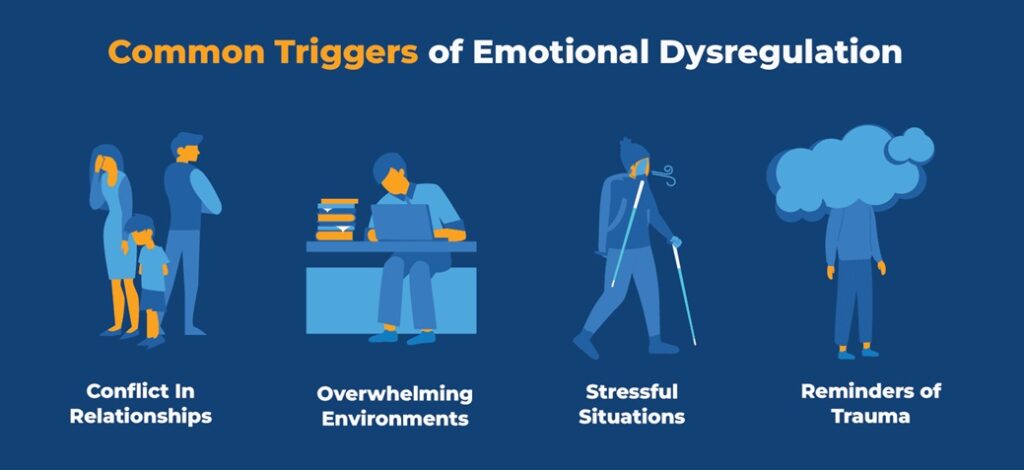
Emotional dysregulation is a term used to describe difficulty managing emotional responses in a way that feels steady, proportional, and workable. It does not mean someone is “too emotional” or broken. It means their emotions can rise quickly, feel intense, and be harder to soothe, which can lead to reactions that feel out of control or out of sync with the situation.
Everyone experiences emotional overwhelm sometimes. Emotional dysregulation becomes more of a concern when it happens frequently, causes problems in relationships or daily life, or leads to coping behaviors that create harm, like lashing out, shutting down, or using substances to numb.
What Emotional Regulation Is, In Simple Terms
Emotional regulation is the ability to:
- Notice what you are feeling
- Name it accurately
- Tolerate the discomfort of it
- Choose how to respond rather than react automatically
- Calm yourself enough to think and act in line with your values
Emotional dysregulation is what it looks like when that system gets overloaded.
Common Signs Of Emotional Dysregulation
Emotional dysregulation can show up differently from person to person. Some people externalize emotions, while others internalize them. Here are some common patterns.
Emotions Feel Too Big, Too Fast
You might go from calm to overwhelmed quickly, or feel like emotions hit you like a wave. Small stressors can feel enormous in the moment.
Examples include:
- Getting intensely angry over a minor inconvenience
- Feeling crushed by a small criticism
- Feeling sudden panic that seems to come out of nowhere
- Feeling deeply hurt and unable to let it go
Difficulty Returning To Baseline
Many people with dysregulation can calm down eventually, but it takes a long time. You might replay events in your mind, feel stuck in a mood for hours, or struggle to move on even when you want to.
Reacting Before Thinking
When emotions spike, the nervous system can go into fight, flight, freeze, or shut down. That can lead to:
- Snapping at people or saying things you regret
- Crying uncontrollably
- Storming out
- Over-texting or seeking reassurance repeatedly
- Making impulsive decisions to escape discomfort
Shutting Down Or Going Numb
Not all dysregulation looks loud. Some people respond by disconnecting.
This can look like:
- Feeling blank or numb
- Avoiding conversations or conflict
- Withdrawing from people
- Dissociating or feeling unreal
- “Checking out” during stress
Strong Sensitivity To Rejection Or Conflict
Some people experience rejection sensitivity, where perceived criticism or disapproval triggers an intense emotional reaction. This can lead to anxiety, anger, shame, or the urge to fix things immediately.
What Causes Emotional Dysregulation?
Emotional dysregulation is often linked to the nervous system and lived experience. It can be influenced by several factors, including:
Stress And Burnout
When someone is chronically stressed, sleep-deprived, or overloaded, their emotional bandwidth shrinks. Things that would normally feel manageable can start to feel impossible.
Trauma And Chronic Stress History
Trauma can keep the nervous system on high alert. When the body expects danger, emotions can trigger quickly and feel intense. Even if the current situation is safe, the nervous system might react as if it is not.
Anxiety And Depression
Anxiety can make emotions feel urgent and overwhelming. Depression can make it harder to access coping strategies, creating a sense of being stuck.
ADHD And Executive Function Challenges
Many people with ADHD experience emotional intensity and impulsive reactions. Difficulty pausing, shifting attention, or organizing thoughts can contribute to emotional overwhelm.
Substance Use
Alcohol and drugs can affect mood regulation. Some substances increase irritability and anxiety after they wear off. Withdrawal can also amplify emotional reactivity.
Biology And Temperament
Some people naturally have more intense emotional responses. That can be completely normal, but it can become dysregulating when the person does not have tools or support to manage that intensity.
How Emotional Dysregulation Affects Daily Life
When emotions feel unpredictable or overwhelming, it can impact:
- Relationships, through conflict, withdrawal, or reassurance seeking
- Work and school, through stress reactivity or difficulty focusing
- Physical health, through tension, headaches, stomach issues, and fatigue
- Self-esteem, especially after emotional outbursts or regret
- Coping habits, including avoidance, binge eating, or substance use
People often feel shame about dysregulation, but shame tends to make it worse. The goal is to build skills, not to punish yourself for having emotions.
What Helps With Emotional Dysregulation
The most helpful approach is often a mix of self-awareness, nervous system regulation, and skill-building.
Notice Early Signals
Emotions usually show up in the body first. Early signals can include tight chest, clenched jaw, racing thoughts, or agitation. Catching these signs early makes it easier to respond.
Practice Regulation Skills
Common tools include:
- Slow breathing that lengthens the exhale
- Grounding techniques like naming five things you can see
- Movement, stretching, or walking to discharge stress
- Taking a short break before responding to a trigger
- Journaling to organize thoughts and emotions
Build A Lifestyle That Supports Regulation
Sleep, hydration, nutrition, and reducing caffeine can make regulation easier. Many people underestimate how much dysregulation is fueled by exhaustion.
Therapy And Skills Training
Therapies like DBT and CBT are often helpful because they teach practical strategies for managing strong emotions and changing unhelpful patterns. Trauma-informed care can be important when dysregulation is tied to past experiences.
The Bottom Line
Being emotionally dysregulated means your emotions feel intense, fast, or difficult to manage, and it takes longer to calm down or respond thoughtfully. It can look like outbursts, shutdowns, impulsive decisions, or feeling overwhelmed by emotions that seem disproportionate. Emotional dysregulation is common, especially with chronic stress, trauma, anxiety, depression, ADHD, or substance use. The good news is that emotional regulation skills can be learned, and with the right tools and support, emotions can start to feel more manageable and less controlling.
If you are searching for help for yourself or a loved one, learn more about men’s mental health treatment centers here.