The Impact of Modern Dental Technology on Diagnostic Precision
We are living in an exciting time for dentistry. The way we care for our teeth and gums has changed greatly. Modern dental technology is the main reason for this progress. It makes dental visits better for everyone.
This new focus on technology means better patient care. It leads to more exact diagnoses and quicker treatments. It also helps make procedures less painful and more comfortable.
We will explore these important advancements. We will look at how digital imaging, laser dentistry, and 3D printing are making a difference. We will also touch on how AI and teledentistry will shape the future of oral health. Our goal is to show how these innovations lead to healthier smiles for us all.
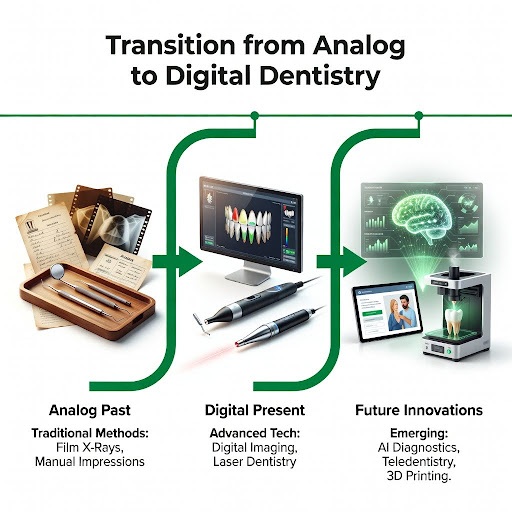
The foundation of effective dental care lies in accurate diagnosis. Modern dental technology has revolutionized this crucial step, moving from traditional, often subjective methods to highly precise, data-driven approaches. This shift significantly enhances our ability to detect issues early, plan treatments meticulously, and ensure patient safety.
Digital imaging technologies stand at the forefront of this transformation. Traditional film X-rays, while once a staple, are rapidly being replaced by more advanced solutions. Digital X-rays, for instance, offer immediate image capture and display on computer screens, eliminating the need for chemical processing and reducing waiting times. More importantly, they expose patients to significantly less radiation—up to 90% less than conventional film X-rays. This enhanced safety profile is a major benefit for both patients and dental professionals, allowing for more frequent and safer diagnostic checks when necessary.
Beyond basic X-rays, Cone Beam Computed Tomography (CBCT) provides a three-dimensional view of the oral and maxillofacial structures. Unlike 2D images, CBCT offers detailed cross-sectional views of bone, soft tissues, nerve pathways, and teeth in a single scan. This comprehensive perspective is invaluable for complex procedures such as dental implant placement, root canal treatments, and orthodontic planning. It allows us to precisely assess bone density, identify nerve proximity, and visualize anatomical structures with unparalleled clarity, leading to more predictable and successful outcomes.
Intraoral scanners have also become indispensable tools in modern dental practices. These handheld devices capture highly accurate 3D digital impressions of teeth and gums, replacing the uncomfortable and often messy traditional putty impressions. The digital models generated are not only more precise but also allow for immediate review and manipulation, improving communication between the dentist, patient, and dental lab. Studies, such as an investigation into the accuracy of four intraoral scanners in mandibular full-arch digital implant impressions, highlight the reliability and precision these devices provide in complex restorative cases. This advancement streamlines the workflow, reduces the margin for error, and significantly enhances patient comfort during impression-taking.
The combination of digital X-rays, CBCT, and intraoral scanners provides a holistic and highly accurate diagnostic picture. This precision allows us to identify even the smallest anomalies, plan treatments with greater confidence, and ultimately deliver superior patient care.
Feature Traditional Film X-rays Digital Imaging Systems (e.g., Digital X-rays, CBCT) Radiation Dose Higher exposure Up to 90% less radiation exposure Image Quality Limited resolution, subject to processing errors High resolution, adjustable contrast and brightness Processing Time Requires chemical development, several minutes Instant display on screen Storage Physical films, prone to damage, bulky Digital files, easily stored, retrieved, and shared Environmental Chemical waste from processing Environmentally friendly Diagnostic View 2D images, limited perspective 2D and 3D (CBCT), comprehensive anatomical detail Patient Comfort Film placement can be uncomfortable Digital sensors are smaller, less intrusive Enhancing Efficiency with Modern Dental Technology
Efficiency in dentistry translates directly into improved patient experience and outcomes. Modern dental technology has dramatically streamlined many procedures, reducing treatment times and minimizing the number of appointments required. This is particularly evident with the advent of CAD/CAM (Computer-Aided Design/Computer-Aided Manufacturing) systems.
CAD/CAM technology enables us to design and fabricate dental restorations, such as crowns, bridges, inlays, onlays, and veneers, right in the dental office. The process typically begins with an intraoral scan to create a digital impression. This digital data is then used by the CAD software to design the restoration with extreme precision. Once the design is finalized, the CAM unit, often a milling machine, carves the restoration from a block of high-quality ceramic material.
The most significant benefit of CAD/CAM is the ability to provide same-day crowns. What once required multiple appointments—one for impressions and temporary placement, another for permanent crown insertion—can now be completed in a single visit. This saves patients valuable time, eliminates the inconvenience of temporary restorations, and reduces the need for multiple anesthetic injections. The precision of CAD/CAM also ensures a superior fit and aesthetic outcome, contributing to the longevity and comfort of the restoration. The artistry involved in crafting such precise and aesthetically pleasing restorations is a testament to how modern tools enhance dental care, offering a blend of technical excellence and patient-focused design, which is a hallmark of artistic modern dental technology. Research has further explored the clinical use of CAD/CAM and 3D printed dentures, demonstrating their growing role in efficient and effective prosthetic solutions.
Precision Through Modern Dental Technology
Beyond diagnostics and restorative procedures, modern dental technology also enhances the precision of routine examinations and patient education. Intraoral cameras are a prime example of this. These tiny cameras, often no larger than a pen, allow us to capture high-resolution images of the inside of a patient’s mouth. The images are displayed on a monitor, giving both the patient and the dentist a clear, magnified view of teeth, gums, and other oral structures.
The unique liquid lens technology found in many intraoral cameras functions much like the human eye, ensuring effortless image capture and delivering clear, detailed visuals that patients can easily understand. This visual aid is incredibly powerful for patient communication. When patients can see exactly what the dentist sees—whether it’s a small crack, a cavity, or an area of gum inflammation—they gain a better understanding of their oral health condition and are more likely to accept and adhere to recommended treatments. It fosters trust and encourages active participation in their dental care decisions.
The precision offered by these cameras complements other advanced diagnostic tools. For example, when discussing cosmetic treatments like cutting-edge dental whitening, showing patients the exact state of their teeth before and after treatment can be incredibly impactful. The ability to precisely document and visualize oral conditions also enables monitoring changes over time, facilitating early intervention. The validation of 3D imaging systems further underscores the reliability and accuracy of these digital tools in clinical practice, ensuring that the visual information we rely on is consistently precise and trustworthy.
Revolutionizing Restorations with 3D Printing and Laser Dentistry
The landscape of dental restorations and treatments has been profoundly reshaped by the advancements in 3D printing and laser technology. These innovations offer unprecedented levels of customization, precision, and patient comfort, bringing us closer to truly personalized, minimally invasive dental care.
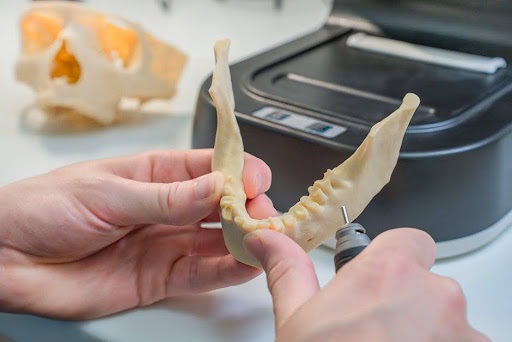
3D printing, or additive manufacturing, has transformed the production of a wide array of dental appliances and restorations. Instead of traditional methods that involve wax-ups and casting, 3D printers build objects layer by layer from digital designs. This technology is now routinely used to create highly accurate surgical guides, which are critical for procedures like dental implant placement. These guides, custom-designed from CBCT scans, ensure implants are placed at the exact angle and depth, significantly improving success rates and reducing surgical complications. Indeed, about 95% of modern dental implants are successful, and they typically last 15 years or more, partly thanks to such precise planning tools. The advancements in guided implant surgery exemplify how digital workflows lead to superior clinical outcomes.
Beyond implants, 3D printing is also used for producing orthodontic aligners, custom trays, temporary crowns, and even models for patient education or complex case planning. The ability to rapidly produce these items in-house or through specialized labs dramatically speeds up treatment timelines and offers greater flexibility. For instance, multi-material 3D printing has been explored for creating customized sports mouthguards, demonstrating the versatility of this technology in preventive and protective dentistry.
Laser dentistry represents another significant leap forward, offering a less invasive and often more comfortable alternative to traditional dental tools. Lasers use focused light energy to perform a variety of procedures on both hard and soft tissues. For patients, this often means reduced pain, less bleeding, and faster recovery times. In many cases, laser procedures can be performed with minimal or no anesthesia, which is a huge relief for those with dental anxiety.
For instance, lasers can be used to treat cavities by precisely removing decayed tooth structure while preserving healthier tooth tissue. They are also highly effective in treating gum disease, reshaping gum tissue, and performing minor oral surgeries with minimal discomfort and accelerated healing. The precision of lasers allows for targeted treatment, minimizing damage to surrounding healthy tissues. This reduced invasiveness is a key advantage, leading to a more pleasant experience and quicker return to normal function for the patient.
Artificial Intelligence and the Future of Oral Health
Artificial Intelligence (AI) is rapidly emerging as a transformative force in dentistry, promising to enhance diagnostic accuracy, optimize treatment planning, and even facilitate earlier detection of various oral conditions. AI algorithms, particularly those based on machine learning and neural networks, can analyze vast amounts of data from dental images (X-rays, scans) and patient records.
In diagnostics, AI can detect subtle patterns that might be missed by the human eye, especially in the early stages of diseases. For example, AI can detect early-stage dental caries and vertical root fractures more accurately than traditional methods. This capability is crucial because early detection enables less invasive, more conservative treatments, preventing minor issues from escalating into major problems. Similarly, AI is proving invaluable in the early detection and management of periodontal disease by analyzing radiographic bone loss and other indicators. It can even assist in identifying suspicious areas in scans and microscope slides for conditions such as oral cancers, helping differentiate tumor types and leading to earlier diagnoses and improved prognoses.
The integration of AI into treatment planning further refines patient care. By processing patient-specific data, AI can help predict treatment outcomes, customize orthodontic plans, and even assist in prosthetic design. This data-driven approach leads to more personalized and effective treatments.
Teledentistry, though not exclusively an AI technology, is significantly enhanced by AI and plays a crucial role in expanding access to dental care. Teledentistry involves the use of information technology and telecommunication to provide dental care remotely. This can include virtual consultations, remote monitoring of oral health, and even remote diagnosis based on transmitted images and data.
Teledentistry is particularly beneficial for underserved or remote populations who may face geographical, financial, or mobility barriers to accessing traditional dental offices. It allows patients to consult with dental professionals from the comfort of their homes, reducing travel time and costs. During public health crises, like the recent pandemic, teledentistry proved invaluable for screening, triage, and follow-up care, minimizing in-person contact while maintaining continuity of care. The American Dental Association has even issued a policy on teledentistry that provides guidance on the modalities such services can follow, signaling its growing acceptance and integration into mainstream dental practice. This blend of remote access and intelligent diagnostics is paving the way for a more equitable and accessible oral healthcare system.
Future Frontiers in Modern Dental Technology
Looking ahead, the horizon of modern dental technology holds even more groundbreaking possibilities. These emerging fields promise to redefine what is possible in oral healthcare, moving beyond repair and replacement towards regeneration and prevention at a molecular level.
Regenerative dentistry is one of the most exciting frontiers. Traditionally, when a tooth is damaged or lost, the focus has been on repairing it with fillings or replacing it with prosthetics. Regenerative dentistry, however, challenges this paradigm by exploring ways to stimulate the body’s natural healing processes to repair or even regrow dental tissues. Imagine dental fillings that encourage your teeth to heal themselves, or a drug that can regrow lost teeth. Researchers have already developed dental fillings that stimulate stem cells to promote the growth of dentin, the main constituent of our teeth. Furthermore, a Japanese startup is launching clinical trials for what is believed to be the first-ever treatment to regrow teeth, targeting conditions such as congenital anodontia. Discoveries from institutions like Karolinska Institutet, mapping cell differentiation pathways in teeth, are accelerating development in this field, offering the potential for biological therapy for damaged teeth.
CRISPR (Clustered Regularly Interspaced Short Palindromic Repeats) gene-editing technology holds immense potential for targeted interventions. While still in early research phases for dentistry, CRISPR could allow us to precisely edit genes to prevent common oral diseases. For example, researchers are conducting studies to isolate and switch off oral cancer-associated genes. Others are using CRISPR to alter the functioning of bacteria responsible for plaque formation, potentially preventing caries and periodontal disease at their source.
Nanotechnology, the manipulation of matter at the atomic and molecular scale, is poised to advance dental materials. This could lead to more durable, biocompatible fillings, implants, and restorative materials, as well as targeted drug-delivery systems for treating infections or promoting tissue regeneration.
Finally, Augmented Reality (AR) and Virtual Reality (VR) are moving beyond entertainment into practical clinical and educational applications. In dental education, AR simulators, such as Image Navigation’s DentSim Simulator, allow students to practice procedures on mannequins with real-time feedback, accelerating skill development. For patients, AR apps can overlay virtual depictions of their post-treatment smile onto their current appearance, helping them visualize aesthetic outcomes. VR, by fully immersing users in a virtual environment, is being used for surgical training, allowing students to observe complex operations remotely, as pioneered by the Royal London Hospital which held the first dental surgery streamed in VR. VR can also serve as a powerful distraction tool for anxious patients, with experiments showing that calming virtual scenes can lead to more positive treatment memories. These technologies promise to enhance both the training of future dental professionals and the patient experience. The integration of such advanced tools, as seen in Arista’s advanced technology offerings, marks a significant step towards a future where precision and patient comfort are paramount.
Challenges and Ethical Considerations in Digital Adoption
While the integration of modern dental technology offers undeniable benefits, it also presents unique challenges and ethical considerations that we must thoughtfully address. The journey towards a fully digitized and technologically advanced dental practice is not without its hurdles.
One of the most significant challenges is the substantial upfront cost of acquiring and implementing these advanced technologies. Digital X-ray systems, CBCT scanners, CAD/CAM units, 3D printers, and laser equipment represent considerable investments for dental practices. This financial barrier can limit adoption, particularly for smaller practices or those in underserved areas, potentially widening the gap in access to high-quality care. Beyond the initial purchase, there are ongoing costs for maintenance, software licenses, and consumables.
Effective practice management is crucial to maximizing the return on these investments. Integrating new technologies requires significant changes to workflow, staff training, and patient scheduling. Without proper planning and adaptation, these tools may not be utilized to their full potential, leading to inefficiencies rather than improvements.
Data privacy and security are paramount concerns in an increasingly digital dental landscape. With electronic patient records, digital images, and remote consultations via teledentistry, vast amounts of sensitive patient data are being collected and transmitted. Ensuring the secure storage, transmission, and access to this information is critical to protecting patient confidentiality and complying with regulations such as HIPAA. The privacy policies of smart devices, including those that collect health data, also raise questions about how patient information is used and shared, necessitating careful consideration from both practitioners and patients.
Professional training and education are essential to safely and effectively harness the full potential of these technologies. Dental professionals, from dentists and hygienists to dental assistants, require continuous education to stay abreast of new equipment, software, and treatment protocols. This commitment to lifelong learning ensures that the technology is used competently and ethically, providing the best possible outcomes for patients.
Finally, ethical considerations arise with certain emerging technologies. For instance, the long-term implications of genetic editing with CRISPR and the equitable distribution of advanced regenerative treatments require careful societal and regulatory oversight. The influence of new technology from a public health perspective highlights the need for policies that ensure these advancements benefit all segments of the population, not just those with privileged access. We must strive to balance innovation with responsibility, ensuring that technology serves humanity’s best interests in oral health.
Frequently Asked Questions about Dental Advancements
What are the primary benefits of digital X-rays over traditional ones?
Digital X-rays offer several significant advantages over traditional film-based radiographs. Primarily, they dramatically reduce patients’ radiation exposure, often by as much as 90%, making them a much safer diagnostic tool. Digital systems also provide instant image capture, allowing us to view images on a computer screen immediately, which speeds up diagnosis and treatment planning. The images themselves are of higher quality, with enhanced contrast and resolution, and can be easily manipulated (zoomed, brightened, sharpened) to detect subtle issues that might be missed on film. Furthermore, digital images are environmentally friendly, eliminating the need for hazardous chemical processing, and are easily stored, retrieved, and shared electronically.
How does CAD/CAM technology benefit the patient experience?
CAD/CAM technology fundamentally transforms the patient experience by offering unparalleled convenience and precision. The most notable benefit is the ability to receive permanent restorations, such as crowns, inlays, onlays, and some bridges, in a single office visit. This eliminates the need for messy traditional putty impressions, uncomfortable temporary crowns, and multiple appointments, saving patients significant time and reducing anxiety. The digital design process ensures a highly accurate, customized fit, resulting in superior comfort and longevity for the restoration. Patients also appreciate the aesthetic quality of CAD/CAM restorations, which are milled from high-quality ceramic blocks to match the natural color of their teeth. This streamlined process, often referred to as same-day crowns, represents a major leap forward in patient-centered care.
Is 3D printing used for more than just crowns?
Absolutely. While 3D printing is increasingly used in conjunction with CAD/CAM to produce crowns and other fixed restorations, its applications in dentistry are far broader and continue to expand. This technology is instrumental in creating highly accurate surgical guides for dental implant placement, ensuring precise positioning and improving success rates. It’s also widely used to fabricate custom orthodontic aligners, retainers, and various orthodontic models, streamlining tooth-straightening treatment. Furthermore, 3D printing enables the creation of customized sports guards, night guards, and specialized training models for dental students, such as 3D-printed teeth with simulated deep caries lesions for practicing selective caries removal. The versatility and precision of 3D printing make it an invaluable tool across numerous dental specialties.
Conclusion
The rapid evolution of dental science ensures that patients receive care that is more precise, comfortable, and efficient than ever before. From the diagnostic clarity offered by digital imaging and AI to the transformative power of laser dentistry and 3D printing, we are witnessing a profound shift towards patient-centered care. Emerging fields like regenerative dentistry and CRISPR promise an even more exciting future, where oral health can be maintained and restored in ways previously unimaginable.
By embracing these innovations, practitioners can focus on long-term outcomes and preventative health, making dental visits less daunting and more beneficial. These technologies not only improve clinical results but also enhance the overall patient experience, fostering trust and encouraging proactive oral health management. If you are looking to experience these advancements or require immediate assistance, contact Casey Dental for comprehensive services, including emergency care. To maintain your results at home, explore the professional-grade products available in our patient store.