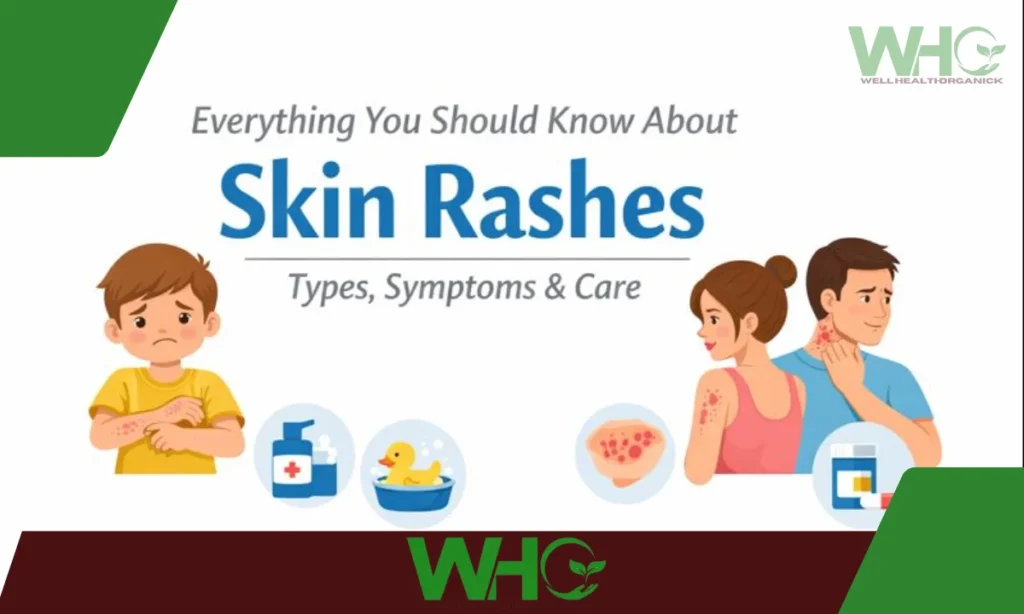
Skin rashes are very common skin problems that people of all ages can experience at some point in life. A rash can appear suddenly or develop slowly over time, and it may look red, itchy, dry, bumpy, or swollen. Sometimes a rash causes discomfort like itching or burning, while in other cases it may not cause any pain at all.
In most situations, skin rashes are harmless and improve with basic care at home. However, some rashes can be a sign of infection, allergy, or an underlying health issue that needs proper attention. Because rashes can appear differently in children and adults, it is important to understand their symptoms, causes, and basic care. Knowing when a rash is normal and when it needs medical help can prevent problems and help the skin heal faster.
What Is a Skin Rash?
A skin rash means any change in the normal look or feel of the skin. It can affect a small area or spread over a large part of the body. Some rashes itch a lot, some cause pain, and some do not cause any discomfort at all.
Rashes may look different on different people and skin tones.
Common Symptoms of Skin Rashes
A skin rash can show the following signs:
- Red or dark patches on the skin
- Itching or burning feeling
- Dry, rough, or scaly skin
- Small bumps or blisters
- Swelling or warmth in the area
- Pain or tenderness
- Fluid or crust forming on the skin
Causes of Skin Rashes
Skin rashes can happen due to many reasons, such as:
- Allergy to food, soap, medicine, or plants
- Skin problems like eczema or psoriasis
- Viral infections like chickenpox
- Bacterial infections like impetigo
- Fungal infections like ringworm
- Insect bites
- Excess heat and sweating
- Stress or weak immunity
Types of Skin Rashes
- Contact Dermatitis: This rash happens when skin touches something harmful or irritating. It causes redness and itching.
- Eczema: Eczema causes dry and itchy skin. It is common in children but can also affect adults.
- Hives: Hives are raised, itchy patches that appear suddenly due to allergies.
- Psoriasis: Psoriasis causes thick, dry, and scaly skin patches, usually on elbows and knees.
- Ringworm: Ringworm is a fungal infection that forms round, itchy patches on the skin.
- Chickenpox: Chickenpox causes itchy red spots that turn into blisters. It mostly affects children.
- Hand, Foot and Mouth Disease: This rash causes blisters on hands, feet, and inside the mouth, mainly in children.
- Impetigo: Impetigo is a contagious bacterial infection with yellow crusts, mostly seen in kids.
- Heat Rash: Heat rash appears as small red bumps during hot and humid weather.
also read: What are the Black Seeds Oil Benefits ?
Skin Rashes in Children
Children often get skin rashes because their skin is soft and sensitive. Most rashes in children are mild and get better with home care.
Common Rashes in Children
- Chickenpox
- Eczema
- Impetigo
- Hand, foot and mouth disease
- Hives
Care for Children
- Keep the child’s skin clean and dry
- Cut nails short to avoid scratching
- Use mild soap and moisturizer
- Give plenty of fluids
- Let the child rest properly
Parents should see a doctor if the child has fever, pain, or a rash that spreads fast.
Skin Rashes in Adults
In adults, skin rashes can happen due to stress, allergies, infections, or skin diseases. Some adult rashes may take longer to heal.
Common Rashes in Adults
- Contact dermatitis
- Psoriasis
- Shingles
- Fungal infections
- Drug-related rashes
Care for Adults
- Avoid things that irritate the skin
- Keep skin clean and moisturized
- Wear loose clothes
- Follow doctor’s advice properly
- Manage stress
Adults should consult a doctor if the rash is painful, spreading, or keeps coming back.
Management and Treatment
Treatment of skin rashes depends on the cause. Some rashes can be treated at home, while others need medical care.
Medical Treatment
- Antihistamines to reduce itching
- Creams to reduce redness and swelling
- Antibiotics for bacterial infections
- Antifungal creams for fungal rashes
- Pain medicine if needed
Home Care
- Keep the affected area clean
- Avoid scratching
- Use gentle skin products
- Take cool baths
- Wear soft cotton clothes
When Should You See a Doctor?
You should see a doctor if:
- The rash spreads quickly
- Fever comes with the rash
- There is pain, pus, or swelling
- The rash affects eyes or mouth
- The rash does not improve
Get emergency help if there is difficulty in breathing or swelling of face and lips.
Can Skin Rashes Be Prevented?
Some rashes can be prevented by:
- Avoiding allergens
- Keeping skin clean
- Using mild soaps
- Drinking enough water
- Avoiding too much heat
Conclusion
Skin rashes are a common part of everyday life and usually do not cause serious problems. Many rashes heal on their own with simple steps like keeping the skin clean, avoiding scratching, and using gentle products. Understanding the early signs of a rash helps in taking quick and correct action.
Children and adults may experience rashes for different reasons, but basic care and awareness play a big role in recovery. Paying attention to symptoms, following proper treatment, and seeking medical advice when needed can prevent complications. With the right care and timely attention, most skin rashes can be managed easily and the skin can return to a healthy state.
also read about: 7 Easy Home Remedies to Control Your Blood Pressure Naturally