
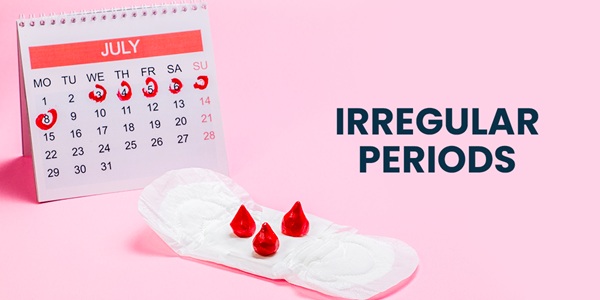
The worrisome thing about irregular periods is that a lot of women simply live with them for years without ever questioning if it’s normal. Oftentimes, they would simply brush off a period that comes early, late, or disappears altogether as a sign of stress or something equally dismissive.
But when your fertility is brought into the picture, irregular periods suddenly become an unavoidable problem – raising concerns about your reproductive health and whether getting pregnant will be harder than it needs to be. If you find yourself in a similar situation and are figuring out what to do next, don’t worry. Read on as we explore how irregular menstrual cycles interact with our fertility and what you can do about it.
How is your fertility impacted by irregular periods?
A woman’s fertility is something that relies heavily on her ovulation, and by extension, her menstrual cycle. To get pregnant, your ovaries need to release an egg, and that egg needs to be available at the right time for the sperm to meet it. A regular menstrual cycle makes this process somewhat predictable and trackable, as ovulation happens consistently with each cycle.
This is the main reason why an irregular period is bad for our fertility, as it makes tracking ovulation way harder than it needs to be. Even when ovulation does occur, it may not follow a clear pattern, which makes timing intercourse quite difficult. At the same time, you should note that irregular periods do not conclusively mean that you are infertile – it is just a sign that there is something related to your fertility that requires a bit of work.
There’s also the hormonal side of things to consider in this situation. Irregular periods are, after all, most commonly caused by hormonal imbalances involving oestrogen, progesterone, thyroid hormones, or insulin. These hormones play a massive role in egg development, uterine lining preparation, and early implantation – but all of them need to work together like a well-oiled machine. If even one of them falls out of sync, our fertility takes a massive hit.
Can you get pregnant even with irregular periods?
Yes, you absolutely can get pregnant even if you’re struggling with irregular periods. There are many people out there, even in such situations, who go on to conceive naturally, sometimes quickly, sometimes after a few attempts. In other words, this condition will not remove your ability to get pregnant.
What will affect it, however, is the ability to time things right. If you ovulate sporadically, you may still release eggs. But you will likely struggle because you can’t identify your fertile window. Conversely, a pregnancy may practically come out of nowhere when you least expect it.
That said, things can become a lot easier if you bring a fertility test into play here. It’s enough to clarify whether ovulation is happening at all, how often it’s occurring, and whether your hormone levels can support a pregnancy right now. All that is to say, if you’re struggling to conceive and are also experiencing irregular periods, the first thing you should do is get yourself a test.
Common signs that you have irregular periods
The first thing you want to look out for is your cycle length and whether it keeps changing. If it’s 24 days in one round but 40 days in the immediate next one, that’s no good. If your periods outright disappear for several months, only to suddenly return out of nowhere, then that’s the clearest flag for irregular periods.
Your bleeding will also be affected with an irregular period – it will either be very heavy, unusually light, or just spotting between cycles. In the same vein, you might experience severe cramps in one cycle but almost nothing in the next one.
What causes irregular periods?
All these signs aside, the problem with irregular periods is that there isn’t a single cause. Most people tend to point at stress as the reason this happens, while true, it is far from the only potential culprit here. There are conditions like polycystic ovary syndrome (PCOS) that affect how the ovaries respond to hormonal signals and can lead to infrequent ovulation. Thyroid disorders, both underactive and overactive, also mess with our cycle’s regularity quite badly. Weight changes play a role, too, as being underweight, overweight, or experiencing rapid weight loss or gain can disrupt your hormone production and ovulation. In some cases, engaging in intense exercise or restrictive eating patterns is enough to throw your cycle off balance.
How can you regulate your periods?
Bringing irregular periods back to normal is a very simple process – one that you can follow step by step. As mentioned at the start, the first thing you need to know is why your periods are irregular in the first place. But on a general level, you’ll likely need to work on your lifestyle after identifying the problem – from managing stress, improving sleep, eating balanced meals, to finding a healthy exercise routine.
If that proves insufficient, then move towards medical support. This step involves procedures like hormonal treatments, thyroid management, or targeted therapies for PCOS and similar conditions.
Another great thing that you can do is to start tracking your cycles, even when it feels chaotic. Over time, you may notice patterns that can turn into valuable information about your fertility and menstrual health. That alone can go a long way in helping you manage the problem.
Take care of your menstrual health
Our menstrual cycles are a reflection of how well our reproductive system is functioning – and by extension, how well our body is functioning. Putting that into perspective, if you’re experiencing irregular periods, that’s your body telling you that something is off and in need of a fix.
Whether your desire to raise a family is an immediate goal or just a thought for the future, you need to take care of yourself right now. The problem you’re experiencing right now may just be one step in this journey, but you should only move forward after understanding it, tracking it, and giving it the attention it deserves.
Also, Read: https://www.wellhealthorganick.com/blog