
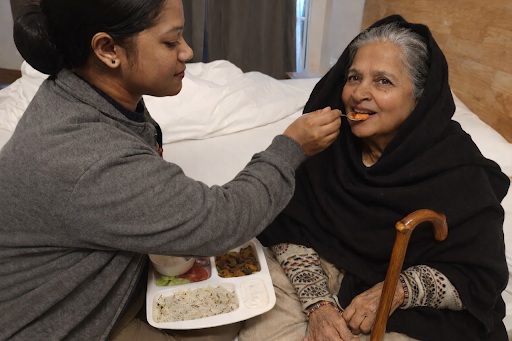
One fall. One missed medicine. One hospital discharge.
That’s often when families start searching for old age homes.
Till then, everything feels manageable at home. But suddenly, care needs become more frequent, more clinical, and more demanding. And the search begins—with one common question:
“What is the cost?”
While this is important, focusing only on cost can lead to the wrong decision. Choosing the right old age home in India is not about finding the cheapest option. It is about understanding what real care looks like—and what your parent truly needs every day.
This guide will help you evaluate the true value of old age homes, so you can make a decision with clarity and confidence.
Price vs Value in Old Age Homes: What Families Often Miss
When comparing old age homes, most families start by comparing monthly fees.
But price and value are very different things.
A lower-cost old age home in India may look similar on the surface. The room may be clean. The environment may seem calm. But what really matters is what happens behind the scenes.
- Who monitors your parent’s health daily?
- What happens if their condition suddenly changes?
- Is there a system, or is everything handled case by case?
A well-run old age home in India focuses on structured care, not just accommodation. This includes trained staff, defined processes, and medical readiness.
In contrast, many old age homes operate without strong systems. Care depends on individuals, not protocols.
That difference may not be visible on day one—but it shows over time.
Care Quality: The Core of Value in Old Age Homes
The most important factor while evaluating old age homes is care quality.
Good care is not reactive. It is planned, structured, and monitored.
In high-quality old age homes, care usually includes:
- Daily monitoring of vitals
- Regular doctor reviews or clinical oversight
- Defined routines for medication and hygiene
- Early identification of health changes
In many retirement homes, care may be limited to basic assistance. This can work for active seniors, but not for those with medical needs.
An expert in geriatric care once shared:
“Most complications in seniors are not sudden. They are missed early signs.”
This is why structured care matters. It prevents small issues from becoming serious problems.
When evaluating care, don’t just ask what services are available. Ask how consistently they are delivered.
Staff Experience: The Real Strength Behind Care
No matter how good the facility looks, care depends on people.
The best old age homes invest in trained staff. This includes nurses, caregivers, and support teams who understand senior health needs.
In many assisted living setups, you may find caregivers who help with daily tasks. But in more structured environments, you will also find:
- Nurses trained in elderly care
- Staff experienced in handling stroke, dementia, or post-surgery cases
- Teams trained to respond quickly in emergencies
When you visit a senior citizen accommodation, observe how staff interact with residents.
- Are they attentive?
- Do they respond quickly?
- Do they speak with patience and respect?
These small observations tell you a lot.
Because in reality, seniors spend most of their day with caregivers—not doctors.
Infrastructure & Safety: More Than Just a Nice Building
Many families get impressed by how a facility looks.
But in old age homes, design is not about appearance. It is about safety.
Good infrastructure includes:
- Anti-skid flooring
- Grab bars in bathrooms
- Easy movement for wheelchairs
- Emergency call systems
In well-designed retirement homes, even small details are planned to reduce risk.
For example:
- Lighting is soft but clear
- Furniture is placed to avoid obstruction
- Walking paths are simple and safe
In assisted living, these features are even more critical because residents may have mobility challenges.
When you visit a senior citizen accommodation, ask yourself one question:
“Can my parent move around safely here, even without help?”
If the answer is no, the risk is high.
Resident Well-being: Life Beyond Medical Care
Care is not only about health. It is also about how a person feels every day.
The best old age homes focus on emotional well-being as much as physical care.
In good old age homes, you will notice:
- Structured daily routines
- Group activities and engagement
- Social interaction among residents
- Balanced and timely meals
In many retirement homes, lack of engagement can lead to isolation.
And isolation affects health more than we realise.
Studies in elderly care show that loneliness can increase the risk of:
- Depression
- Cognitive decline
- Slower recovery
This is why assisted living environments often include planned engagement activities.
When you visit a senior citizen accommodation, don’t just look at the rooms. Look at the people.
- Are residents interacting?
- Do they seem active or withdrawn?
That will tell you more than any brochure.
Why Organised Old Age Homes Offer Better Value
Not all old age homes operate the same way.
Some are standalone setups. Others are part of organised, professionally managed systems.
Organised old age homes in India usually follow:
- Standard processes for care
- Defined staff training protocols
- Regular monitoring and audits
This creates consistency.
In contrast, unorganised old age homes may depend heavily on individuals. If staff changes, care quality may change too.
This is where credibility matters.
Many retirement homes today are moving towards structured models. But not all follow clinical standards.
Why Accreditation Matters in Old Age Homes
When evaluating old age homes in India, accreditation is an important factor.
Standards like NABH indicate that a facility follows defined quality and safety processes.
In accredited old age homes, you can expect:
- Clear clinical protocols
- Regular quality checks
- Defined emergency response systems
In assisted living environments with accreditation, care is not left to chance.
It is system-driven.
For families, this reduces uncertainty.
Hidden Costs of Choosing the Wrong Old Age Home
Choosing between old age homes based only on price can lead to problems later.
Some common outcomes include:
- Frequent hospital visits due to lack of monitoring
- Delayed recovery after surgery
- Increased dependency due to lack of rehabilitation
- Emotional stress for the family
In many cases, families move their parents from one old age home in India to another after a bad experience.
This transition itself can be stressful for seniors.
That’s why it is better to choose carefully from the beginning.
How to Make the Right Decision
When shortlisting old age homes, take a structured approach.
Visit more than one place. Spend time observing.
Ask questions like:
- Is there 24×7 medical support?
- How are emergencies handled?
- What is the staff-to-resident ratio?
- Is there a doctor involved in care planning?
In retirement homes, comfort may look good. But always check clinical readiness.
If possible, consider a short stay. Many assisted living facilities offer this option.
It helps you understand:
- Daily routines
- Food quality
- Staff responsiveness
A trial experience often gives more clarity than a one-hour visit.
Final Thoughts: Choosing Value Over Price
Choosing among old age homes is one of the most important decisions for a family.
It is not just about cost. It is about care, safety, and dignity.
The right old age home in India will:
- Support health consistently
- Provide trained and reliable care
- Ensure safety at all times
- Help your parent feel secure and respected
Many old age homes may look similar at first. But their approach to care makes all the difference.
Whether you are exploring retirement homes, assisted living, or any senior citizen accommodation, focus on what truly matters.
Because in the end, value is not what you pay.
Value is what your parent experiences—every single day.