
Key Takeaways:
- Millennials and Gen Z are redefining housing preferences, emphasizing technology, sustainability, and flexible spaces.
- Single-person and multigenerational households are influencing the demand for diverse housing options.
- Urbanization and innovative city initiatives are driving property values and development patterns.
- Gentrification is transforming neighborhoods, impacting property markets and community dynamics.
Millennials and Gen Z: Redefining Housing Preferences
Real estate has entered a transformative era as Millennials and Gen Z emerge as pivotal homebuyers and renters. This generational shift has ushered in new preferences, such as demand for advanced smart home technology and eco-friendly features in residences. These trends can be seen not only in the homes themselves but also in the greater expectations for communities and amenities. Modern buyers prioritize spaces that are both functional and flexible, with energy-efficient systems, adaptable layouts, and dedicated work-from-home setups ranking particularly high. According to Edgewater real estate expert Jason Schonholtz, technology, community, and sustainability are core values that consistently drive younger buyers’ decisions in fast-growing markets.
Alongside these technological and sustainability priorities, Millennials and Gen Z buyers also gravitate toward urban neighborhoods offering vibrant lifestyles. The emphasis is not just on living spaces but on the experience and accessibility that neighborhoods provide, often seeking proximity to dining, culture, and recreation. These generations are reshaping what it means to “own a home,” increasingly willing to trade traditional house features for access to communal amenities and low-maintenance living.
Rise of Single-Person and Multigenerational Households
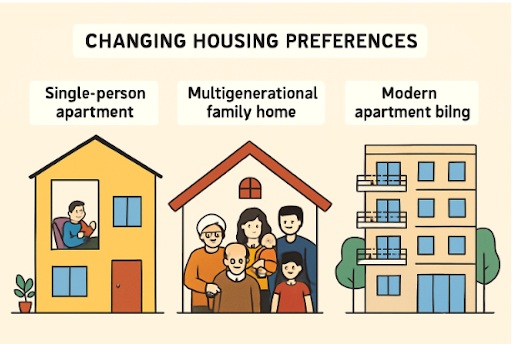
The demographic makeup of households is evolving, profoundly affecting housing demand. A record number of individuals now choose to live alone, seeking compact, efficient, and conveniently located homes. On the other end of the spectrum, economic factors and changing cultural norms are driving a notable rise in multigenerational households, where parents, children, and even grandparents live under one roof. This shift requires the market to offer homes with flexible layouts—think of in-law suites, dual primary bedrooms, and multipurpose common areas.
Home designers and developers must respond to these needs by creating properties with adaptable spaces and privacy features. Storage, soundproofing, and versatile rooms are especially relevant, enabling households to adapt how they use their living space over time. As family dynamics continue to diversify, so too must the real estate options available to buyers and renters across all markets.
Urbanization and Smart City Developments
Ongoing urbanization is intensifying the need for intelligent infrastructure and integrated amenities within city centers. As more people relocate to urban locations, property values are increasingly tied to innovative development strategies—most notably, smart city initiatives that seamlessly combine technology, transportation, and sustainability. City planners and developers collaborate to create connected neighborhoods, prioritizing efficient public transit, green spaces, and high-speed internet access throughout the community.
As innovative technology becomes standard in both homes and public amenities, real estate markets in cities benefit from increased desirability and market value. For buyers and investors, these features aren’t just bonuses—they are expected standards. The constantly evolving landscape of urban living continues to attract a wide array of residents, from remote workers to retirees, seeking both convenience and luxury in one place.
Gentrification and Its Impact on Neighborhoods
Gentrification is one of the most polarizing phenomena affecting today’s real estate market. This process involves transforming lower-income neighborhoods through the influx of more affluent residents and new businesses, which in turn increases property values, alters community identities, and sometimes leads to displacement. While gentrification can bring much-needed investment, new amenities, and improved safety, it raises critical questions about affordability and the preservation of cultural traditions.
Balancing Growth and Community Integrity
Real estate professionals and policymakers face the challenge of encouraging neighborhood revitalization while maintaining inclusivity and protecting long-standing residents. Initiatives such as affordable housing mandates and community benefit agreements are increasingly seen as vital tools for ensuring that growth benefits everyone, not just newcomers or investors.
Adapting to Demographic Shifts: Strategies for Real Estate Professionals
Understanding demographic trends is no longer optional for those in the real estate sector. Success today depends on anticipating and responding to buyer and renter preferences: incorporating innovative technology, offering energy-efficient properties, and providing adaptable layouts for households of all sizes. Education and outreach are also critical—buyers and sellers rely on real estate agents who can interpret and translate these shifting needs into actionable opportunities.
Developing Targeted Solutions
Clever marketing, flexible financing, and creative collaboration with developers allow professionals to serve clients more effectively. As demographic patterns shift, those who proactively address the needs of diverse clients will thrive in the changing marketplace.
The Role of Technology in Meeting New Demands
Digital innovation touches every aspect of real estate—from the way people search for homes to how transactions are completed. Virtual tours, digital contracts, and online mortgage approvals streamline the process for buyers, especially tech-savvy Millennials and Gen Z. Smart home features like app-controlled lighting, thermostats, and security systems have shifted from luxury to expectation, particularly among younger buyers. Staying current with emerging green building technologies and home automation tools gives agents and developers a significant edge.
Future Outlook: Preparing for Continued Change
The only constant in real estate is change, and demographic trends will only accelerate the sector’s evolution. By keeping a close watch on population movements, household composition, and technological breakthroughs, real estate professionals can continue to meet buyers’ evolving needs. Forward-looking agents, developers, and investors who adapt quickly will play a vital role in shaping tomorrow’s communities—and ensuring that housing remains accessible, innovative, and inclusive for all.