
Detox has become one of those overused wellness words. Every influencer with a blender and a ring light has a “three-day cleanse” that promises to fix your stomach, make your skin glow, and possibly help you find inner peace too. Ayurveda takes a slower, more grounded approach. It believes your body already knows how to heal. You just need to remove what gets in the way.
This is where classical Panchakarma comes in. In Ayurveda, it is known as the deep detox system, usually done under professional supervision. But not everyone can disappear to a retreat in Kerala for a month. The good news is that the principles behind Panchakarma can be adapted for safe at-home routines that lighten your digestion, calm inflammation, and reset your body without turning your life upside down.
Below is a simple human guide to Ayurvedic home detoxing. No extremes. No starvation. No bowls of cayenne lemonade.
Why Detox at All
Ayurveda looks at health through the lens of digestion. When digestion works well, your body absorbs nutrients efficiently and produces clean energy. When digestion struggles, food is not fully broken down, and your system generates a sticky waste called ama. Think of ama as cellular junk that slows everything. You feel heavy, foggy, sluggish, and your metabolism becomes irritable.
A detox is not about punishment. It is about giving your digestion a break so the body can catch up on overdue housekeeping.
Signs you may benefit from a light detox:
- Waking up tired even after a full night of sleep
- Bloating after meals
- Constipation or irregular digestion
- Coated tongue in the morning
- Low appetite or cravings for heavy foods
- Feeling mentally dull or unmotivated
If this sounds familiar, a gentle detox can help you reset your system.
Start With the Foundation: Food That Is Easy to Digest
Most Ayurvedic detoxes begin by simplifying your meals. You are not starving yourself. You are feeding your body food that is easier to break down so it can clear out the backlog.
For three to seven days, shift your meals toward:
- Warm, cooked foods
- Lightly spiced soups and stews
- Mung dal and rice, a classic gut friendly combination
- Steamed vegetables
- Minimal oils
- No raw salads, fried foods, or sugar
Ayurveda commonly recommends a simple one pot dish of lentils, rice, ginger, cumin, cilantro and ghee. It supports digestion without overwhelming your system and keeps blood sugar steady while detoxing.
If you feel low energy on day one or two, that is normal. If you feel faint or unwell, stop immediately. Detox is not a competition.
Abhyanga: The Oil Massage That Does More Than Make You Smell Like a Spa
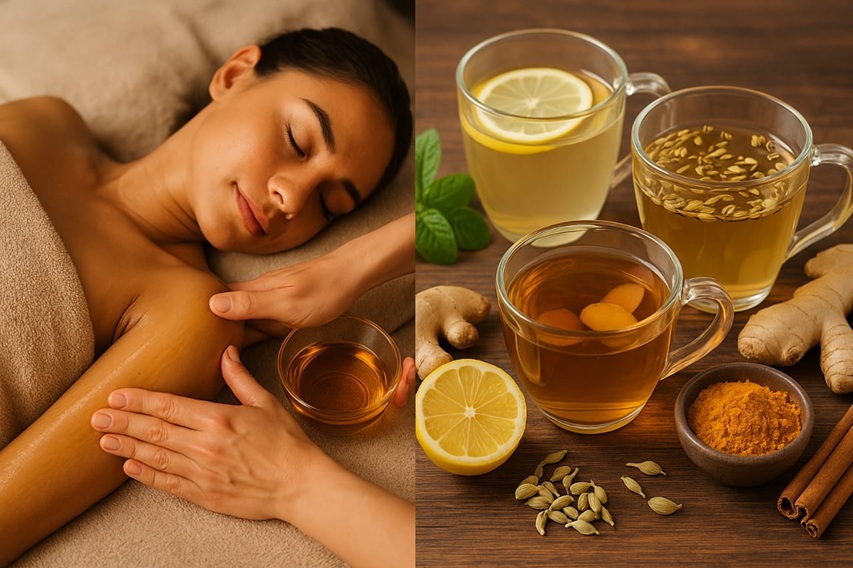
One of the most accessible Panchakarma techniques is abhyanga, a warm oil massage you can do at home. It relaxes the nervous system, supports detox through the skin, and helps deepen sleep.
How to do it:
- Warm a little sesame oil in your palms or use almond oil for sensitive skin.
- Massage your limbs with long strokes and your joints with circular motions.
- Move your stomach in clockwise circles to support digestion.
- Leave the oil on for 10 to 20 minutes before showering with warm water.
Your shower may feel like a negotiation between stubborn oil and hot water, but your nervous system will thank you for it.
Doing abhyanga a few times a week during detox amplifies the benefits and makes the whole process feel more nourishing, not restrictive.
Gentle Sweating to Open the Channels
Traditional Panchakarma includes therapeutic sweating to loosen toxins and move them toward elimination. At home, you do this gently.
You can:
- Sip ginger tea and sit in a warm room
- Take a warm bath
- Enjoy a short session in a steam room if available
- Do light yoga or stretching
You are aiming for mild warmth, not an intense workout sweat.
Simplify Your Schedule and Slow Down
Detox is not only about nutrition. Your mind and nervous system need a break too. You may be surprised how much mental clutter contributes to physical lethargy.
During your detox days:
- Cut down on screen time
- Pause heavy workouts
- Avoid social overload
- Keep meals at regular times
- Go to bed early
The more predictable your day is, the more your body shifts out of fight or flight and into healing mode.
Teas and Herbs That Support the Process
You do not need a cabinet full of exotic powders. A few simple aids are enough.
Helpful additions:
- Ginger tea to support digestion
- Cumin coriander fennel tea to reduce bloating
- A pinch of turmeric in warm water once daily for inflammation
- Warm lemon water in the morning to wake up digestion
Herbs are helpers, not the main event. Keep it simple.
When You Should Not Detox
Detoxing is not appropriate for everyone. Skip it if you are:
- Pregnant or breastfeeding
- Underweight or recovering from illness
- In a time of significant stress
- Having severe digestive symptoms, including diarrhea
- Managing medical conditions that require steady nutrition
When in doubt, speak with a qualified practitioner.
The Post Detox Glow Up
Once your digestion has rested for a few days, your energy lifts. You feel lighter. Your mind clears. Your appetite becomes more stable. This is a sign your body has finished the internal housekeeping you allowed it to do.
Do not return to heavy food right away. Reintroduce foods slowly and notice how each one affects your body. It will tell you what to keep and what to leave behind.