
In the research of certain medicines, diseases, and vaccines, many researchers often make unintentional mistakes by not verifying the cell line. This often leads to blunders like unreliability and loss of trust due to wrong research. For this reason, a cell line authentication DNA test in India has become mandatory for many researchers.
This process provides the information regarding the original identity of the cell lines, which is a necessary step before starting a research project. It helps researchers to find out if the cell line of interest they’re working on is correctly identified in order to make their research more valuable.
For instance, let’s say a researcher is working on a cell line for bone cancer to develop a new medicine. However, later they come to know that the cell line they were working on is for cervical cancer. This creates chaos as the time and resources spent on their researchers went in vain. But a cell line authentication test can prevent this from happening.
The Need for Cell Line Authentication
Cells are the basic structure of life. Cells stored in the lab can lose their identity over time due to environmental conditions and contamination. Therefore, a cell line authentication process becomes mandatory.
There are three common errors that often occur in cell lines over the course, such as:
Misidentification of Cell Lines – In some cases, the cell lines are often misidentified upon discovery. Also, they’re sometimes mislabeled during handling. This can significantly lead to wrong research without authentication.
Genetic Drift – Cells can lose their original identity over time after being stored in the lab for a long time. This can also impact the research if it’s conducted without authenticating the cell lines.
Cross-Contamination of the Cells – Such cases occur when the cell lines get mixed with other cell lines. Also, the environmental contaminants play a huge role in contaminating the cell lines when they’re not carefully managed.
Method of Authenticating the Cell Line
A cell line authentication testing procedure is performed using the following steps:
1. Sample Collection – A small portion of the stored cell line is obtained for testing. During this procedure, the sample is handled carefully to avoid any contamination.
2. DNA Extraction – Using special chemicals, the DNA is extracted from the cell sample. After this, the DNA becomes ready to be analyzed further.
3. DNA Amplification – Then the extracted DNA goes through a Polymerase Chain Reaction (PCR), which is a technique that creates multiple copies of specific regions of DNA. Then the process focuses on STRs (Short Tandem Repeats), which are the repeating sequences inside a DNA.
4. DNA Profiling – Then the DNA is analyzed to create a genetic profile of the cell line. This profile is unique for each cell line, similar to fingerprints.
5. Final Result – The created DNA profile is then compared with the existing database of DNA profiles to look for a potential match. If the match is found, then the cell line is confirmed to be genuine. If there’s no match found, then the cell line is considered contaminated or genetically drifted.
Major Journals Requiring Cell Line Authentication
Many researchers initially never relied on cell line authentication to check if the cell line they’re working on is correct. This caused many published papers to be retracted or canceled because the information was based on false research.
But today, major scientific journals and funding groups, like the National Institutes of Health (NIH), have strict guidelines. They often require proof of cell line authentication before they will publish research on a certain disease, medicine, or vaccine.
Cell line authentication not only helps publish research in a journal, but it also ensures that the money spent on research is not wasted on unreliable data. It further helps the global scientific community work together more effectively.
Protecting Research Budget & Reputation
Research on certain medicines or vaccines is very expensive. It requires specialized equipment, expensive chemicals, and years of endeavor. However, if a researcher, in the middle or at the end, finds out that their cells were misidentified, all that time and resources go in vain. This can significantly impact the researcher’s career and also the organization supporting the work.
By making cell line authentication a regular part of the lab schedule, researchers can find the potential red flags before they can even start their research. It is more affordable to test a sample once or twice a year than to abandon the project in the middle or in the end.
It also protects the reputation of the researchers, as they will never have to worry about their work being questioned due to cell identity issues.
Why Choose DNA Forensics Laboratory for Cell Line Authentication?
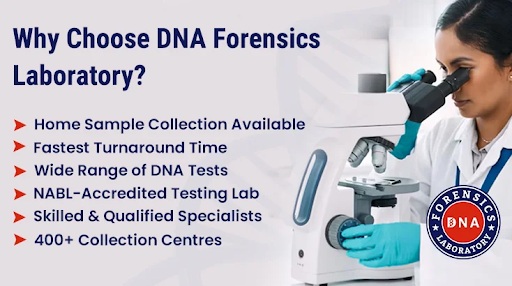
When choosing a DNA Testing lab for the cell line authentication process, it is important to look at its accreditations. A laboratory must follow strict rules to ensure its results are accurate every single time. DNA Forensics Laboratory, also called DFL, is one of the most reliable labs for such procedures. They hold many prestigious certifications, such as NABL and ISO certifications.
In addition to these, DFL is also accredited by ISO 15189:2012 and holds the ILAC MRA status, which means their test results are recognized internationally. They are also certified by CLIA, AABB, and ANAB.
As they are recognized by the Ministry of Justice (MOJ), they follow the same high-quality standards as NATA (Australia). Individuals can be sure that their research data is in safe hands.
Benefits of Choosing DNA Forensics Laboratory Pvt. Ltd.
- Global Acceptance: Because of their many accreditations, the reports you get from DFL are accepted by major scientific journals and funding agencies worldwide.
- Fast Results: They understand that research cannot wait. They provide clear and accurate reports quickly so you can get back to your experiments.
- Accuracy: They follow strict rules to prevent any mistakes or contamination during the testing process.
- Expert Support: Their team of scientists can help you understand your results and what they mean for your study.
Final Words
Using the wrong cells can ruin years of work and cost a lot of money. Many journals now require proof of cell authentication before they will publish your paper. By choosing the DNA Forensics Laboratory, researchers ensure that their hard work is protected and that their scientific discoveries are based on accurate cell lines.