
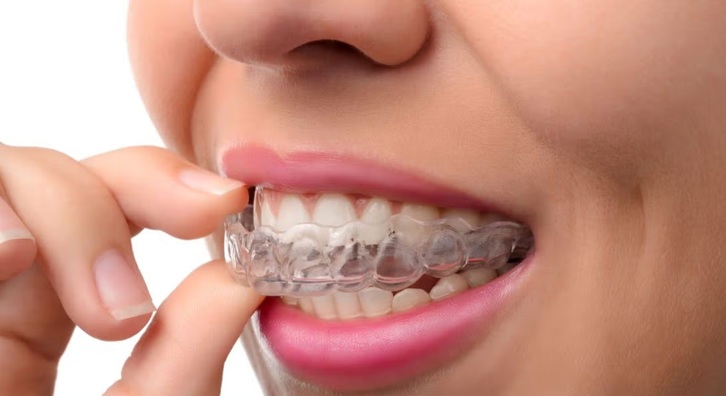
When people think about teeth straightening or closing teeth gaps, the first image that often comes to mind is metal braces. The aligners teeth treatment has changed this perception. It offers a much more subtle approach.
The most common question patients ask about is not cost or duration. It is about how aligners teeth actually look and how they move them without wires or brackets.
This blog is the guide you’re looking for.
How do aligners teeth look when worn?
Aligners are made from clear, medically safe plastic. It is designed to sit closely over the teeth. When they are worn, they look transparent. This means they blend with your natural teeth. Looking from a normal speaking distance, they are not noticeable usually.
Things people notice:
- A slight shine on teeth under the lighting
- Your straighter teeth
They are made after taking the size and shape of your teeth. They sit on your teeth. It does not extend to the gums.
Do aligners change the way you smile or speak?
During the first few days of wearing aligners, you might feel that your smile looks different. This sensation fades when the mouth adapts. About speech, there might be a little lisp during the first week. This is only for a short while. It will improve as the tongue adjusts to the aligner’s surface.
How do aligners move?
Curious how the plastic sheet moves teeth? Let’s find out!
Each aligner tray is designed to move the teeth in only a very small amount. When the patient switches to a new one, it continues the movement. This step-by-step controlled movement shifts teeth within the bone. The main aspect here is precision. Every stage is virtually planned before the treatment begins.
What happens during the first few weeks?
In the initial time:
- Patients may feel some pressure when they shift to a new set.
- Teeth may feel a little sensitive for a short period.
- Movement happens slowly. It may not be visible immediately.
During this time, the focus is on creating space. Even if the changes are not obvious, the movement is already happening.
Visible changes over time
As the treatment progresses, changes become more noticeable. Crowded teeth appear straightened, gaps are closed and the overall smile looks better. Since the movement takes time, people often notice improvements when comparing photos taken weeks apart.
The role of attachments in aligner treatment
Small tooth-colored attachments are placed on certain teeth. They are attachments. They are designed to help aligners grip their teeth better. It guides movements. These may make the aligners more noticeable, but they are less visible than metal braces.
They are important in achieving better results.
Who should choose aligners?
Do you look at your smile and see these issues?
- Crowded teeth
- Huge gaps between teeth
- Forwardly placed upper teeth
- Forwardly placed lower teeth
- Lips don’t close completely
If you think you suffer from any of these issues, you should talk to an orthodontist. They will assess your teeth and find out the issue. Online searches will give you an idea of the treatment. But whether you need it or not will only be decided by an orthodontist.
What do patients notice by the end of treatment?
By the end of the treatment, patients observe:
- Improved smile balance
- Straighter teeth or closed gaps
- Easier cleaning and better oral hygiene
- Increased confidence
Since the treatment is slow and steady, the results will feel natural rather than sudden.
Conclusion
For people seeking a clear understanding of how aligners work, they can make a more informed decision now. This blog talks about everything that goes on virtually and in real life. Clear aligner treatment is not only about teeth straightening, but also about planned and controlled movement.