

Do you want to feel more in control of your health?
CBT has become one of the most effective and well-researched treatments in recent years. It’s all about training your brain to think and behave in a way that makes you feel better.
The great news?
CBT health treatment is readily available. It’s structured. And you’ll see results faster than you might expect.
In this article, we cover:
- How Does CBT Work?
- CBT Techniques
- Why Does CBT Work Better Than Other Forms of Therapy?
- Conditions CBT Treats
- How to Start CBT Treatment
How Does CBT Work?
CBT is a form of talk therapy that is used to help people struggling with a variety of conditions. It’s all about the connections between your thoughts, emotions, and behaviours.
This is the catch…
Negative thoughts lead to negative emotions. Those emotions then lead to undesirable behaviours. And then, those behaviours solidify the negative thoughts that you had in the first place.
It’s a vicious cycle.
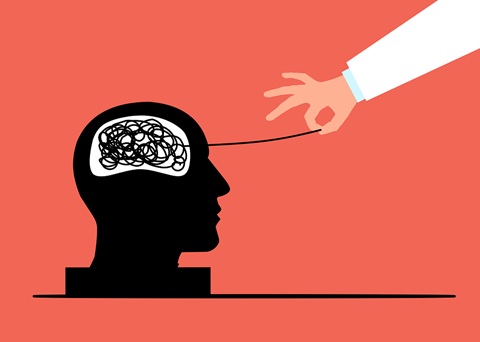
CBT therapy steps in and breaks that cycle. It does this by teaching you useful techniques to identify and change distorted thought patterns. If you change your thinking about things, your emotional response will naturally adjust.
This is different from other traditional forms of therapy that will take years to figure out why you’re thinking the way that you are. CBT is all about what you’re thinking right now. It targets problems with specific solutions.
The studies show this as well. A comprehensive meta-analysis of 409 trials and 52,702 patients revealed that CBT statistically and clinically outperformed control conditions for several conditions.
Impressive, isn’t it?
CBT Techniques
CBT is more than just sitting down and talking about your problems. It provides a toolkit with practical techniques that can help you create a shift in your life. Let’s look at the most powerful ones…
Cognitive Restructuring
This is the most important part of CBT. Cognitive restructuring works to teach you to identify automatic negative thoughts that pop up in your head and challenge them by backing them up with evidence. The majority of people don’t realise that the thoughts that they have are not facts. They are just interpretations.
Here’s how you can do it:
If a negative thought pops up in your head, you want to analyse the evidence for that thought as well as the evidence against that thought. You look for cognitive distortions. These include catastrophising, all-or-nothing thinking, or mind reading.
After you do that, you replace the negative thought with a thought that’s more positive or balanced.
Behavioural Activation
Depression will make a person detach themselves from activities that they once used to enjoy. This will then further fuel their depression.
Behavioural activation is used to reverse this very cycle.
You will then plan positive activities even when you have a lack of motivation to do so. The activities don’t have to be grand. Small steps like going for a walk or calling your friend can be enough. These small steps will create momentum.
Gradually, you will find that these activities will help to rebuild the sense of pleasure and accomplishment that depression takes away.
Exposure Therapy
Anxiety thrives off of avoidance.
The more you avoid things that scare you, the bigger the fear becomes. Your brain is interpreting avoidance as validation that the situation at hand is genuinely dangerous. Exposure therapy slowly and gradually gets you to be in front of the things that you’re scared of.
You start with situations that are less threatening and you build your confidence from there. Then, you move onto more difficult situations to expose yourself to.
The key is repetition. Repetition is important because every time you are successful at an exposure, you are slowly teaching your brain that the feared outcome doesn’t actually occur. As you do this more and more over time, your anxiety will reduce naturally.
This is particularly useful when it comes to phobias, social anxiety and panic disorder.
Mindfulness Integration
Modern CBT also often involves the use of mindfulness practices.
Mindfulness is used to help you to observe your thoughts rather than getting wrapped up in them. You learn to recognise the fact that your thoughts just come and go. They do not define you.
This awareness creates space between the stimulus and the response. It is in that space that change can happen.
Why Does CBT Work Better Than Other Forms of Therapy?
The evidence is clear. CBT consistently leads to stronger outcomes than most other therapeutic approaches. However, why is that?
It’s structured. The reason why is because each session is designed to have a purpose. You set clear goals and measure your progress towards them. That level of structure keeps therapy on track and more productive.
Skills you’ll take with you forever. This is unlike some therapies where your progress really depends on attending more sessions. With CBT, you are taught tools that you can use for the rest of your life. For example, if you learn how to challenge negative thoughts, you will be able to do this for the rest of your life.
It works on your thoughts and your behaviours. Changing your thoughts alone isn’t enough. Changing your behaviours alone isn’t enough. It’s about both of these aspects working hand in hand for a faster and more complete result.
If you look at the numbers, a large naturalistic study reported that a measly 1.9% of patients stated that their symptoms actually got worse during the time that they received CBT. The majority reported a meaningful improvement.
It works for most conditions. Anxiety. Depression. OCD. PTSD. Eating disorders. Insomnia. CBT has a very strong evidence base for treating all of these, and more.
Conditions CBT Treats
CBT is not one specific approach that will work the same for every single person. The therapist will adapt the treatment based on your condition.
- Anxiety disorders: including social anxiety, generalised anxiety, panic attacks, and specific phobias
- Depression: cognitive restructuring and behavioural activation are particularly effective at interrupting depressive cycles
- OCD: exposure and response prevention can be used to help reduce compulsive behaviours
- PTSD: trauma-focused CBT can help to process difficult memories in a safe environment
- Insomnia: CBT for insomnia can target the thoughts and behaviours that maintain sleep problems
The versatility of CBT is what makes it such a valuable approach for almost anyone looking to improve their mental health.
How to Start CBT Treatment
Are you ready to give CBT a try?
The first step would be to find a qualified therapist. You will be looking for a practitioner who is specifically trained in cognitive behavioural approaches. A lot of therapists offer online CBT sessions now, which increases accessibility even more.
Don’t be afraid to ask your potential therapists about their experience and training. The fact of the matter is, a good fit matters.
Here’s what you can expect:
Sessions will typically last for 45-60 minutes per week. The length of CBT treatment can vary, but the majority of treatment courses last between 8-20 sessions, based on the condition being treated. Some people will notice an improvement within just a few sessions. Other people will take a bit longer.
Homework is important. CBT is an approach that will require you to be actively involved between sessions. You will be practicing techniques, completing worksheets, and trying new behaviours. The work that you do outside of sessions is typically where the biggest breakthroughs occur.
Can you do CBT on your own?
Self-help CBT resources are available and can be useful for mild symptoms. Books, apps, and online programs all teach the core techniques.
However, if you are dealing with moderate to severe symptoms, you will see better outcomes if you work with a trained therapist. They are able to provide accountability, tailor techniques to your situation, and help you stay on track when things get challenging.
Wrapping Things Up
CBT works. The evidence cannot be ignored.
CBT provides useful techniques that target both your thoughts and your behaviours. It leads to results faster than many other alternative therapies. And the skills you learn during CBT will last you a lifetime.
Your mental health challenges don’t have to control your life. With the right techniques and support, you are able to make meaningful changes.
The question is no longer whether CBT works…
The question is, are you ready to start?